Comparison · 2 picks
Click & Grow vs iDOO: Which Indoor Garden Wins? (2026)
Affiliate disclosure: we may earn a commission when you buy through links on this page, at no extra cost to you. Our verdicts are our own and are not influenced by compensation. As an Amazon Associate I earn from qualifying purchases.
These are the two archetypes of the countertop garden. Click & Grow sells a closed, pod-based ecosystem where everything is handled for you; iDOO sells an open, bring-your-own-consumables system that costs a fraction to run. Neither is simply better - they suit different growers, and the right pick depends on whether you value effort or economy.
The comparison below draws on manufacturer specifications, UK retailer listings and independent long-term reviews rather than a single set of impressions. Where an item links to one of our product pages the price updates automatically, so you always see the current figure.
At a glance
All 2 options side by side.
 |  iDOO 12-Pod iDOO 12-Pod | |
|---|---|---|
| Price | See price | See price |
| Best for | The effortless pod garden. | The open-system value pick. |
| Review | Read review → | Read review → |
| Buy |
The picks in detail
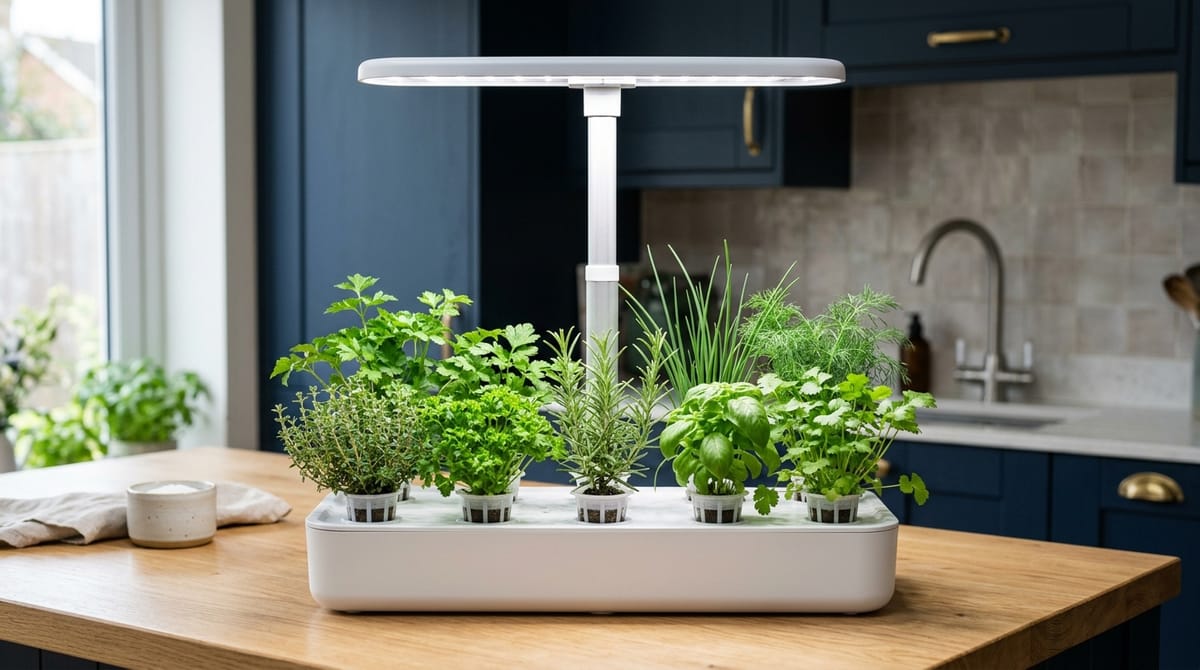
Click and Grow Click & Grow Smart Garden 9
Bottom line. The effortless pod garden. Pre-seeded Smart Soil pods mean no nutrients to dose and no pH to check - you just add water. It looks smart on a worktop and germinates reliably, but every grow cycle costs you proprietary pods, and yields are modest.
Pros
- Very low-effort growing - insert pods, fill the tank, plug in
- Low power draw for a 9-pod unit (13 W LED, about 6.2 kWh a month)
- Large 4 L tank stretches refills to roughly 3 weeks in early growth
- Smart Soil pods release nutrients themselves, so there is no nutrient dosing or pH management
- Germination guarantee on official pods, with reviewers reporting responsive replacements
- Clean design that works in a living space, with a companion app for care prompts
Cons
- Closed ecosystem - ongoing spend on proprietary pods is the real running cost, not electricity
- 'Grow Anything' own-seed pods still mean buying the branded pod hardware
- Yields are kitchen-garnish scale, not meaningful food production
- Plant height is limited by the light arm
- The 16-hour light is bright enough that some owners switch it off in shared living spaces in the evening
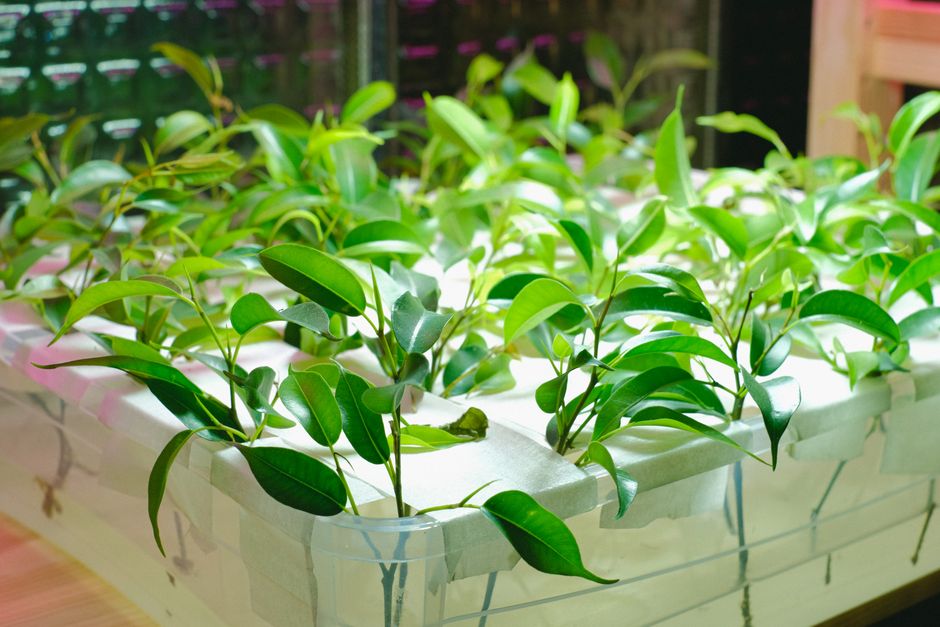
iDOO 12-Pod
Bottom line. The open-system value pick. Generic sponges, any seed and any nutrient make it dramatically cheaper to run, and twelve pods give room to experiment. The trade-offs are a thinner light spread, limited headroom and budget build, but for the price it is hard to beat.
Pros
- Runs on generic consumables - blank sponges, ordinary seed packets and any hydroponic nutrient - so ongoing costs stay low
- 12 pods gives more simultaneous plants than most similarly sized rivals
- Built-in fan aids pollination and airflow, something several competitors omit
- Simple set-and-forget 16/8 light timer with separate veg and flower/fruit spectra
- Overnight quiet mode idles the pump and fan for bedrooms and studios
- Visual water window makes topping up obvious
Cons
- Light spreads thin across the wide 12-pod deck - side-by-side testing found herbs go leggy over longer grows
- Roughly 28 cm of headroom becomes restrictive as plants mature
- Budget plastic build with noticeable flex; testers report pump failures and LED fade emerging around the one-year mark
- Tank-circulation design gives weaker root aeration at the tank edges than per-pod delivery systems
- No app or WiFi on the standard model - scheduling is manual button presses (a separate WiFi variant exists)
Which countertop garden should you buy?
Buy the Click & Grow Smart Garden 9 if convenience is the priority and you will happily pay for pods to never think about nutrients. It is the more polished object, the better performer straight out of the box, and the one to give someone who has never grown anything. Buy the iDOO 12-pod if running cost matters and you do not mind sourcing your own sponges, seeds and liquid feed - over a year of growing, the savings are substantial, and the extra pods let you grow more at once.
The honest middle ground is that both are herb-and-salad machines rather than vegetable plots. If you want larger harvests or a sturdier, taller unit, a mid-range hydroponic garden like the LetPot is worth considering over either.