Balcony Greenhouses: What Actually Works in the UK
Wind, not cold, defeats most balcony greenhouses. What works on a UK balcony, how to anchor one safely, and what you can realistically grow.
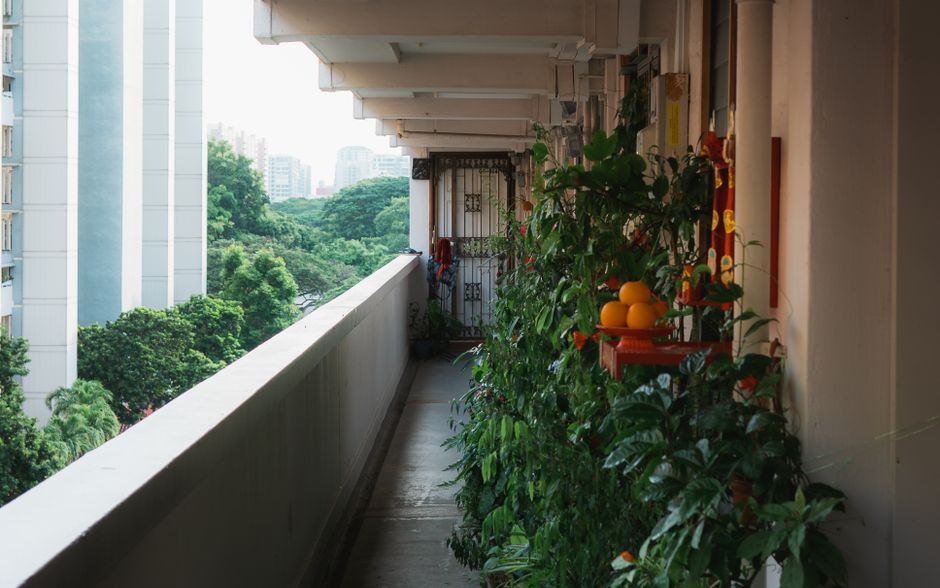
A balcony greenhouse is a small covered growing structure that stands on the balcony floor or leans against its wall. In practice that means one of three things: a tiered shelf unit inside a zipped plastic cover, a low cold frame (a lidded box with a transparent top, traditionally used to harden off seedlings), or a wall-leaning lean-to. All three buy you earlier sowings and later harvests. All three live or die by how well you deal with wind.
Does a greenhouse actually work on a balcony?
Yes, within narrow limits. A balcony greenhouse buys degrees, not seasons.
A covered structure traps solar gain through the day and holds a little of it after dark. The problem is thermal mass: a unit holding a few hundred litres of air and a handful of pots stores almost no heat. By dawn the inside temperature has usually converged with the outside temperature unless you are heating it.
What you reliably get is shelter. Wind chill, driving rain and hail do far more damage to seedlings on an exposed balcony than air temperature does, and a cover stops all three. You also get a controlled place to germinate and harden off, which is the job most balcony growers actually need doing.
What you do not get is a frost-free winter or a tomato house on a shaded balcony. Light is the other hard limit, and no cover adds any. If your balcony faces north, read what to grow on a north-facing balcony before you spend anything on glazing.
Why is wind the real problem, not cold?
Balconies sit above ground level on the exposed face of a building. Wind speed rises with height, and buildings create funnelling and downdraught effects at corners and in the gaps between blocks. A balcony four floors up is a materially windier place than a garden at the same address.
A greenhouse is a sail. A tiered cover unit with a footprint the size of a bedside table and a metre of height presents a large area to the wind while weighing almost nothing. The forces involved are easily enough to move it.
The failure modes run in a predictable order. The cover splits at the zip seam first. Then the lightweight frame folds or the shelves collapse. Then the whole unit lifts, tips, and in the worst case goes over the railing - which turns a gardening problem into a falling object above a pavement.
Every design decision below follows from that: cut the sail area, get the weight low, and restrain the structure.
How do you anchor a balcony greenhouse safely?
Keep it low and put it against the building wall. The wall is the sheltered edge of a balcony; the railing is the exposed one. A waist-height unit tucked into the wall corner survives weather that flattens a shoulder-height one standing at the balustrade.
Weight the base, not the top. Paving slabs, bricks or filled containers on the bottom shelf lower the centre of gravity and make tipping much harder. Heavy pots belong on the floor and lower shelves; empty trays and light propagators go on top.
Restrain the frame. Webbing straps or garden twine run around the frame and down to a weighted base stop the structure from lifting away from its ballast. Renters who cannot drill can get a long way with heavy planters as anchor points and straps tensioned between them.
Take the cover off before a storm. This is the single most effective thing on the list and it takes two minutes. A bare frame with a weighted base has a fraction of the sail area and rides out weather that would shred a zipped unit. When a named storm is forecast, strip the cover and stow it.
Never drill into the building fabric without permission. Balcony slabs, walls and balustrades are structural or safety-critical, and fixings into them are usually a matter for your freeholder or landlord rather than your own judgement. More on that below.
Can your balcony take the weight?
Balconies are engineered elements with a design load, and that load is set for the specific building. Part A of the Building Regulations governs this: the government's Approved Document A states that it "covers the loadings on a building, and the construction of the structural elements including the foundations, walls, floors, roofs and chimneys". The figure that applies to your balcony depends on the building's age and construction, so there is no generic number worth quoting.
The practical point is that the greenhouse is not the heavy part. Wet compost is. A 40-litre container of saturated peat-free compost weighs roughly as much as a bag of cement, and balcony growers tend to concentrate several of them in one corner along with a water butt or filled cans.
Two habits keep that sensible. Spread the load along the wall instead of stacking it in one spot, and keep the heaviest items close to the building rather than out at the balustrade, since a cantilevered balcony is at its stiffest where it meets the wall. If your balcony is large, old, or you are planning something substantial, ask the building manager or managing agent rather than guessing.
How hot does a small covered greenhouse get?
Hotter than people expect, and fast. A small sealed volume in direct spring sunshine climbs well above the outside temperature within the hour, and there is too little air and soil inside to buffer the swing.
The results are familiar to anyone who has left one zipped up on a bright March morning: scorched seedlings, compost dried to dust, and salad crops bolting straight to seed.
Managing that is the actual work of owning a balcony greenhouse. Unzip or prop the lid in the morning on any sunny day, close it in the late afternoon. That daily rhythm matters more than anything you paid for at purchase.
Two consequences follow. If you are away, either leave it fully vented or do not use the cover at all - a shut greenhouse is far more dangerous to plants than no greenhouse. Our guide to watering a balcony while you are on holiday covers the irrigation half of the same problem. And through high summer many balcony growers remove the cover entirely from June to August and use the frame as a plant stand, putting it back on in September.
Which type suits a balcony best?
Low cold frame. The best all-round choice for an exposed balcony. It is low, stable, simple to weight down, and almost impossible to tip. It does everything a balcony grower genuinely needs - germination, hardening off, autumn salad cover - with the least risk.
Our companion piece on whether you need a mini greenhouse for a small patio works through the same decision at ground level, where the wind maths is much kinder.
Tiered shelf unit with a zip cover. The cheapest and by far the most common, and the one that ends up in the street. It suits a genuinely sheltered corner and an owner willing to manage the cover through the year. Treat the ballast and strapping as mandatory rather than optional.
Wall lean-to. Uses the building wall for both shelter and support, so it presents roughly half the sail area of a freestanding unit of the same volume. The trade-off is that it usually needs fixing to the wall, which puts it squarely in permission territory.
Cloches and individual pot covers. The lowest-risk option: no structure to fail, nothing to blow over, and enough protection for a handful of pots. On a very exposed balcony these outperform a full greenhouse simply because they survive.
Rigid-panel mini greenhouses. Polycarbonate panels last longer than plastic film and do not tear, and the units are heavier and steadier. They cost more and still need anchoring - weight helps, but it is not a substitute for restraint.
What can you realistically grow?
The honest gain is three to four weeks at each end of the season, plus a much higher survival rate for young plants.
Spring. Sow three or four weeks ahead of an uncovered balcony and harden off without losing a tray to a cold snap. This is where a balcony greenhouse earns its keep.
Autumn and winter salad. Salad leaves, rocket, spinach, chard, coriander, spring onions and radish are fast, shallow-rooted and tolerate cool conditions. Under cover they carry on well past the point the balcony alone would stop producing. Our guide to what to grow on a balcony in autumn goes deeper into the timings.
Overwintering. Hardy herbs, garlic and broad beans come through fine. Understand what the structure is doing for them: it is keeping rain and wind off, not keeping frost out.
Poor candidates. Full-size tomatoes, cucumbers and peppers on an exposed or shaded balcony. They need light levels and sustained warmth a thin cover cannot supply, and a tall plant inside a small structure makes the wind problem worse. Aspect and light decide these crops, not glazing.
Do you need permission from your landlord or freeholder?
It depends on your tenure and on whether anything gets fixed to the building.
A freestanding, unfixed structure that does not block an escape route is usually uncontroversial, though it is still worth a check. Anything drilled or bolted into a wall, floor or balustrade is a different matter and needs consent first. For leaseholders the terms are set by the lease, and the government's guidance on leaseholder rights and responsibilities is the starting point for what you can and cannot alter.
Building management rules are the other constraint, and they have tightened. Many blocks now restrict what residents may store on balconies at all, largely as a result of fire-safety reviews, and those rules sit alongside the lease rather than inside it. Renters should check the tenancy agreement and ask the letting agent.
The practical route through all of this: keep the structure freestanding, removable and clear of escape routes, and most of the question stops applying to you.

Do You Need a Mini Greenhouse for a Small Patio?
What to Grow on a North-Facing Balcony

What to Grow on a Balcony in Autumn (UK)