How Much Food Can You Actually Grow on a Balcony?
A realistic look at balcony yields: what a few containers actually produce in a UK season, which crops repay the space, and where the honest limits are.
Balcony growing has an honesty problem. Retailer copy implies a few grow bags will meaningfully feed you, and when they do not, people conclude they have a black thumb rather than a physics problem. The limit is compost volume and hours of direct light, and both are fixed by your building.
The useful question is not how much food a balcony can produce in total. It is which crops repay the space, because on a balcony space is the entire constraint.
What does a balcony realistically produce?
Yields swing enormously with light, pot size and how consistently things get watered, so treat any single number with suspicion. Ranges under reasonable conditions are more honest, and the pattern between crops is more useful than any individual figure.
Roughly, and assuming a spot that gets a good half-day of direct sun:
What a container typically returns in a UK season
- Cut-and-come-again salad, one 30cm trough
- A bag of leaves every week or two across several months, cut repeatedly from the same plants.
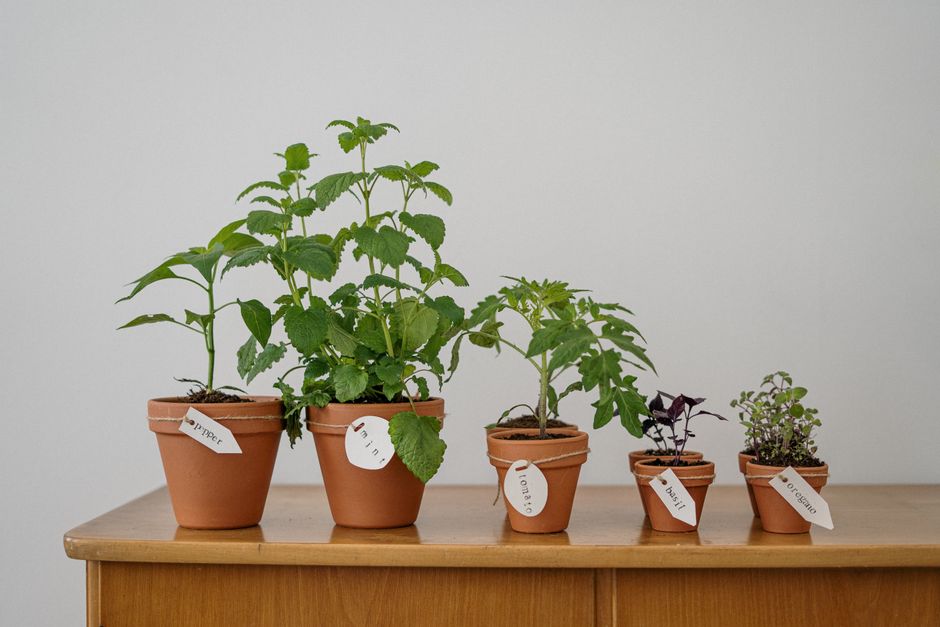
- Soft herbs, one pot per variety
- Effectively unlimited for normal cooking use. The constraint is your appetite, not the plant.
- Tomatoes, one 30-40 litre pot
- A few kilos across the season from one healthy cordon plant, concentrated into a short window.
- Chillies, one 10-15 litre pot
- Far more than a household eats fresh, which is why most of it ends up dried or frozen.
- Potatoes, one 40 litre sack
- Roughly a meal or two for a family. Container growing is widely reckoned to yield well below what the same seed would give in the ground.
- Courgettes, one large pot
- One plant is usually enough, and often more than enough, for one household.
- Root vegetables and brassicas
- Possible, but a poor use of balcony space. They occupy a container for months for a single harvest.
Read down that table and the shape of the answer appears. The crops that work are the ones you harvest repeatedly from the same plant, or that are expensive and perishable to buy. The crops that disappoint are the ones supermarkets sell cheaply in bulk and that tie up a pot until they are ready.
Which crops give the best return for the space?
Ranking by value returned per litre of compost, rather than by weight, changes the answer completely.
Soft herbs
Basil, coriander, parsley, mint. Bought in supermarket packets they are among the most expensive food per kilo in the shop, they wilt in days, and you use them a few leaves at a time. A pot on a windowsill replaces that purchase almost entirely. Nothing else on a balcony comes close on value per litre of compost.
Cut-and-come-again salad
Loose-leaf varieties regrow after cutting, so one shallow trough produces repeatedly rather than once. Bagged salad is expensive, deteriorates fast and is the classic guilt purchase that ends up in the bin, which makes home-grown leaves genuinely substitutive.
Chillies
One plant produces far more than a household uses fresh, they dry and freeze well, and they are happy in a small pot. High return for a small footprint.
Tomatoes
The crop everyone starts with, and a fair choice, but it needs a big pot, a lot of sun and daily watering in a heatwave. Worth it for flavour rather than economics: a few kilos of good tomatoes is a real return, but the same money in seed potatoes would feed you longer.
Everything else
Potatoes, roots, brassicas and squashes are grown on balconies for the pleasure of it, not the yield. They are cheap to buy, they store well, and they occupy a container for a whole season for one harvest.
Why do container yields fall short of the seed packet?
Packet figures assume open ground. A container changes three things at once, and they compound.
Root volume. A plant in a pot has a hard limit on the compost it can draw from, and once roots fill it, growth slows regardless of feeding. This is why the same tomato variety gives noticeably more in a 40 litre pot than a 20, and why the standard advice is always a bigger pot than looks necessary.
Water. Containers dry out from all sides and from the top, and a plant that dries out repeatedly stops setting fruit and starts bolting. On a hot balcony a large pot can need watering twice a day, which is the single most common reason a promising crop stalls in July.
Light hours. This is the one you cannot fix. A north-facing balcony, or one overshadowed by the building opposite, may get two or three hours of direct sun where a fruiting crop wants six or more. Leaves and herbs tolerate that; tomatoes, chillies and courgettes do not, and no amount of feeding compensates.
Work out your actual direct-sun hours before choosing crops rather than after. It is the variable that decides which half of the list above is available to you.
How do you tell if your balcony is actually feeding you?
There is a simple test, and it is more revealing than weighing harvests.
For one month, note what fresh produce you still buy. If the salad and herbs have dropped off the shopping list and stayed off, the balcony is doing real work. If you are still buying everything and eating the odd home-grown tomato as a treat, it is a hobby that produces occasional food, which is a perfectly good thing to be, but worth being clear-eyed about.
For a national reference point on what a household actually gets through, Defra's Family Food statistics report purchased quantities of food and drink from a UK household survey, and they are accredited official statistics rather than an estimate. Comparing your own shopping against that baseline is a better measure of whether growing is displacing purchases than any yield figure on a seed packet.
The honest expectation for most balconies is that you displace the small, expensive, perishable purchases completely and barely dent the staples. That is a genuine saving and a genuine improvement in what you eat. It is not self-sufficiency, and no arrangement of containers on a balcony will make it so.
What are the honest limits?
Three worth knowing before you spend money.
Weight. Wet compost is heavy, and a balcony has a structural loading limit that is not usually posted anywhere obvious. Large sacks of potatoes and several 40 litre pots add up quickly. If you are in a flat and planning something substantial, that is a question for the managing agent rather than a thing to estimate.
Season length. A UK balcony gives you roughly one productive stretch from late spring to early autumn for fruiting crops. Leaves and herbs stretch it at both ends, and that is most of the reason they score so well on the list above.
Attention. Containers are less forgiving than ground. A week away in July without a watering plan can end a tomato crop outright, which is why our guide to watering a balcony while you are away exists.
Balcony Greenhouses: What Actually Works in the UK
Smart Watering for a Balcony While You're on Holiday
Soil Moisture Sensors for Pots: Do You Need One?